Our Son’s Story: Parent Experiences on ABA and Progress in English
When our son was first diagnosed on the autism spectrum at age three, we entered a maze of questions: How do we support him at home? How can we help him communicate his needs? What does school readiness look like for him? Like many families, we were introduced to Applied Behavior Analysis (ABA) and cautiously optimistic. Today, looking back over several years of steady work, we want to share a clear, compassionate account of what ABA looked like for our family—what helped, what was hard, and how our son’s communication, social engagement, and independence blossomed over time.
We began with a comprehensive assessment that mapped his strengths and challenges across communication, play, self-help, and early academics. He had a vivid curiosity and a deep love for letters and music. He also struggled with transitions, had limited spontaneous language, and found group settings overwhelming. Our ABA team emphasized individualized goals, parent coaching, and collaboration with speech and occupational therapy. This interdisciplinary approach proved crucial to translating gains across settings: home, school, playground, and extended family gatherings.
One of the earliest breakthroughs came from focusing on functional communication. Instead of training scripts, our team built communication around our son’s real motivations—asking for a favorite snack, requesting a specific song, or choosing between books. The behavior technicians used natural environment teaching: they followed his lead, embedded prompting, and reinforced attempts to communicate. At first, he pointed or used a simple picture exchange. Within months, he paired pictures with sounds, then single words. A particularly joyful moment was the first time he said “help please” when a puzzle piece got stuck, rather than dissolving into tears. That moment, small as it sounds, was a turning point that echoed through our days: fewer meltdowns, more shared smiles, and growing confidence.
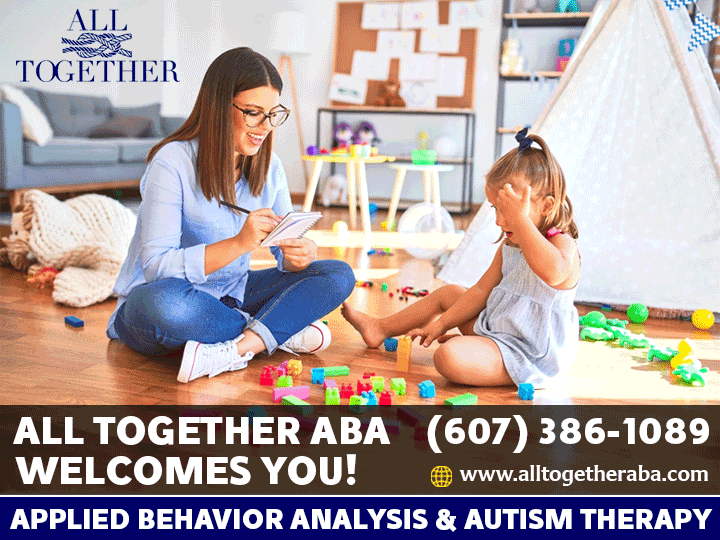
On social skills, the journey was slower but equally meaningful. Playdates had been hard. Our son tended to line up toys or retreat when other children approached. Through ABA, we used structured play routines—turn-taking with blocks, rolling a ball back and forth, and later, cooperative pretend scenes with simple roles. These were short, predictable, and reinforced with specific praise and tiny rewards. Over time, we faded the supports and started to see spontaneous bids for interaction: a tap on the shoulder, a glance to share excitement, a quiet “your turn.” The data the team collected—frequency of spontaneous initiations, success in three-turn exchanges—gave us a real-time picture of progress that matched what we felt at home: less isolation, more connection.
Behavioral improvement came as we learned to recognize the “why” behind difficult moments. Before ABA, we felt stuck in cycles of “don’t do that” and “please stop.” Functional behavior assessments reframed these moments. For example, persistent hand-flapping before dinner wasn’t “misbehavior”—it signaled sensory overload and anxiety about changes in routine. We adjusted the environment: a visual schedule for the evening, a quiet corner with a weighted lap pad, a consistent “first-then” cue. We taught replacement behaviors: asking for a break, choosing between two activities, and using a timer to prepare for transitions. Gradually, intensity and duration of challenging behaviors declined, and our evenings felt less like triage and more like family time.
Language development and academic readiness were areas where we saw the most striking ABA therapy results. Our son was especially motivated by songs and letters, so the team wove early literacy into sessions: labeling images in favorite storybooks, matching letters to beginning sounds, and later, building simple sentences with subject-verb-object structures. Naturalistic reinforcement—singing a favorite chorus when he completed a phrase, or earning a turn with a letter puzzle after reading a line—kept engagement high. By kindergarten, his communication skill growth included answering who/what/where questions, describing a picture in 3–4 sentences, and initiating help requests with minimal prompts. He also began to generalize these skills outside therapy: asking his grandmother for “tea please” during Sunday visits and telling his teacher “I need the blue crayon.”
Milestones didn’t come in a straight line. Plateaus and regressions happened, especially during big transitions—moving houses, starting a new classroom, or after holidays when routines changed. What helped was keeping the focus on data and function, not just compliance. If a strategy stopped working, the team adjusted: changing reinforcers, simplifying demands, or revisiting prerequisite skills. Parent training sessions were vital. We practiced prompting without overhelping, reinforcing the behavior we wanted to see, and staying consistent across caregivers. Over time, we became more confident partners, not just recipients of a service plan.
Family life changed in tangible ways. Bedtime, once a tangle of refusals and tears, became predictable with a visual routine and graduated exposure to new steps. Mealtimes improved when we used shaping to expand our son’s diet—celebrating smells, touches, and tiny tastes, not only clean plates. Weekend outings grew easier as we prepared with social stories and practiced “waiting,” “asking,” and “walking together” in short, supported bursts. https://privatebin.net/?b1cb2d9c93b7bb4d#BftGpg9AKUGfz2qPAXcdKKxYQjRXGwBDuv5DCUgCugQZ These real-life ABA examples—practiced in grocery aisles, on playgrounds, and in the living room—made the difference between discrete skills and genuine independence.

As parents, we also needed space to hold nuance. We valued the structured, evidence-based framework of ABA and the clear documentation of autism progress outcomes, and we advocated for a style that respected our son’s sensory needs, autonomy, and joy. We asked for goals that prioritized communication, play, friendship, self-advocacy, and safety over surface-level compliance. We insisted on collaboration with speech therapy to support natural language, and with occupational therapy to address sensory regulation. When a goal didn’t align with who our son is, we spoke up—and our team listened. That trust was pivotal.
Today, our son is a chatty, curious grade-schooler who loves maps, animal facts, and guitar riffs. He greets classmates by name, negotiates for extra playground time, and reads short nonfiction passages with palpable pride. He still needs support in group discussions and noisy spaces, and we continue to practice conversational back-and-forth and flexible thinking. But his world is bigger, brighter, and more connected. We’re deeply grateful for the clinicians who taught us to turn everyday moments into learning opportunities and for a model that helped us measure progress while honoring individuality.
For families considering ABA, here are a few guiding reflections from our experience:
- Look for providers who individualize goals, share data transparently, and collaborate across disciplines. Prioritize functional, meaningful targets: communication, play, self-advocacy, safety, and daily living skills. Ensure parent training is central; skills stick when they’re practiced in real life. Monitor generalization—skills should transfer to home, school, and community. Advocate for your child’s sensory and emotional needs alongside skill-building.
Questions and Answers
Q1: How long did it take to see meaningful changes in communication and behavior? A1: Small gains appeared within weeks—more eye contact, successful requests with pictures. Clear, functional language and reduced meltdowns emerged over several months. Larger milestones, like multi-sentence narration and group participation, unfolded over one to two years, with steady practice and parent involvement.
Q2: What made the biggest difference in reducing challenging behaviors? A2: Identifying the function behind behaviors and teaching replacements (asking for a break, choosing, using a timer) combined with predictable routines and sensory supports. Consistency across home, therapy, and school was essential.
Q3: How can families ensure ABA aligns with their values? A3: Ask providers to explain the purpose behind each goal, involve you in setting priorities, and share data regularly. Emphasize autonomy, consent, and sensory respect. If something feels off, speak up and request adjustments.
Q4: Did skills generalize outside therapy? A4: Yes, but only when we practiced in natural settings. We used real-life routines—meals, errands, playdates—to reinforce skills, and the team planned for generalization from the start.
Q5: What should we look for in measuring progress? A5: Track both quantitative data (frequency, duration, accuracy) and qualitative markers (reduced stress, increased engagement, independence). Celebrate child development milestones that matter to daily life—requesting help, joining a game, following a routine—alongside academic gains.